

It’s a core measure for comparing companies, showing how well they can make assets out of liabilities. Book value is basic but widely used, especially in banking and insurance. They give a clear view of a company’s long-term financial health.
Debt Overhang Risk
For example, Microsoft Excel provides a balance sheet template that automatically calculates financial ratios such as the D/E ratio and the debt ratio. Debt and debt equivalents, non-controlling interest, and preferred stock are subtracted as these items represent the share of other shareholders. Cash and cash equivalents are added, as any cash left after paying off other shareholders is available to equity shareholders. Equity Value (also known as Market Value of Equity) is the value of a company’s shares outstanding. It reflects the portion of a business that belongs to shareholders. 💼📈 Whether you’re analyzing a company as an investor, founder, or financial analyst, Equity Value is a key metric.

How to calculate total equity
- This way of classifying assets helps financial experts evaluate resources accurately.
- Big companies, like Exxon Mobil Corp. with $213,052 million in equity, use it to make right reports.
- Borrowing that seemed prudent at first can prove unprofitable later as a result.
- These calculations highlight how the equity formula helps determine a company’s financial health and inform investment decisions.
A section on these securities can also be found in the 10K report. The dilutive effect of these securities can be calculated using the treasury stock method. To calculate the diluted shares outstanding, add the additional number of shares created due to the dilutive effect of securities on the basic securities outstanding. For healthy companies, equity value far exceeds book value as the market value of the company’s shares appreciates over the years. It is always greater than or equal to zero, as both the share price and the number of shares outstanding can never be negative.
What is shareholder equity (SE)?

Learn financial statement modeling, DCF, M&A, LBO, Comps and Excel shortcuts. Note that the treasury stock line item is negative as a “contra-equity” account, meaning it carries a debit balance and reduces the net amount of equity held. Under a hypothetical liquidation scenario in which all liabilities are cleared off its books, the residual value that remains reflects the concept of shareholders equity. Let us take the annual report of Apple Inc. for the period ended on September 29, 2018. As per the publicly released financial data, the following information is available. Now, let us understand how to calculate total equity step-by-step in detail below.
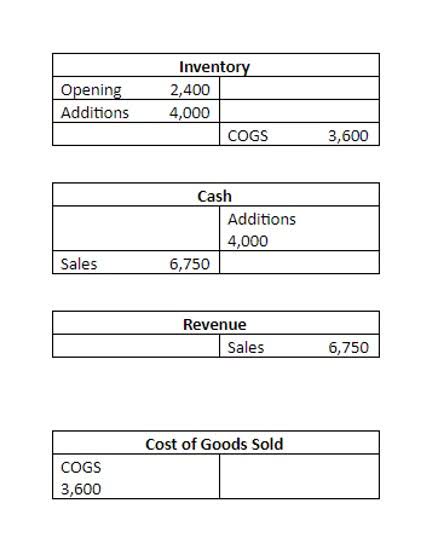
- One of the benefits of understanding how the income statement and balance sheet work together is that you can figure out missing pieces of information based on numbers elsewhere in the financial statements.
- To gain a more detailed view, expand this equation to include components such as common stock, preferred stock, APIC, retained earnings, and subtract treasury stock.
- Over the course of an accounting period, each sale accumulates in the revenue account.
- However, in most cases, preferred shareholders do not have voting rights.
- There are several consolidation benefits, such as presenting a unified financial picture, which can improve transparency and investor confidence.
- To effectively use the equity accounting formula, maintain consistent financial records and make regular adjustments to reflect changes in equity.
We take two companies that have the same asset value and show AI in Accounting what happens to their equity value as we change their capital structures. Conceptually, stockholders’ equity is useful as a means of judging the amount of money that a business has retained. But while the valuation of Tesla (TSLA) seems outsized compared to its industry peers, one important aspect to understand is that traditional automakers are much more dependent on debt financing. The two metrics—equity value and enterprise value—are the two most common methods to measure the valuation of a company.
Stop Wasting the End of the Year — Take These 5 Steps to Get Ahead in 2026
It represents the residual interest in the assets of a company after deducting liabilities. SE appears on the balance sheet alongside assets and liabilities. The SE ratio measures the proportion of a company’s total assets financed by SE (rather than debt). The number of preferred shares is usually accounting disclosed in the company’s financial statements under the equity section.
What does the balance sheet formula represent?
A company’s common equity is an important part of calculating its Return on Common Equity ratio, or ROCE. The Business Development Bank of Canada team explains that a company’s ROCE is a measure of what kind of return common investors get relative to how much they originally invested in the company. However, common shareholders are last in line to claim company assets in the case of a company’s failure and may or may not be entitled to dividends. If dividends are paid, they go to preferred shareholders first, as explained by the Business Development Bank of Canada. Average total equity is the average carrying value of equity that are recorded on the balance sheet at the different reporting dates. Usually, the carrying value of equity at the end of the previous year and those at the end of the current year are used in the calculation to find average total equity on the balance sheet.

The value of equity for shareholders
This financial measure demonstrates the net worth of an entity from the perspective of its owners. The interpretation of whether a company’s total equity is “high” or “low” depends on several factors, including industry norms, the company’s historical performance, and its ability to generate returns. If a company’s equity is negative for a prolonged period of time, it can amount to balance sheet insolvency. As such, many investors view companies with negative equity as risky total equity formula or unsafe. However, many analysts use equity in conjunction with other financial metrics to gauge the soundness of a company. When combined with other tools, an investor can use equity to accurately analyze the health of an organization.

Because equity is essential for shareholders, it’s also crucial for business owners and people on executive boards to calculate. The retained earnings in this formula are the sum of a company’s total or cumulative profits after they pay dividends. Most shareholders receive balance sheets that display this number in the “shareholders’ equity” section.